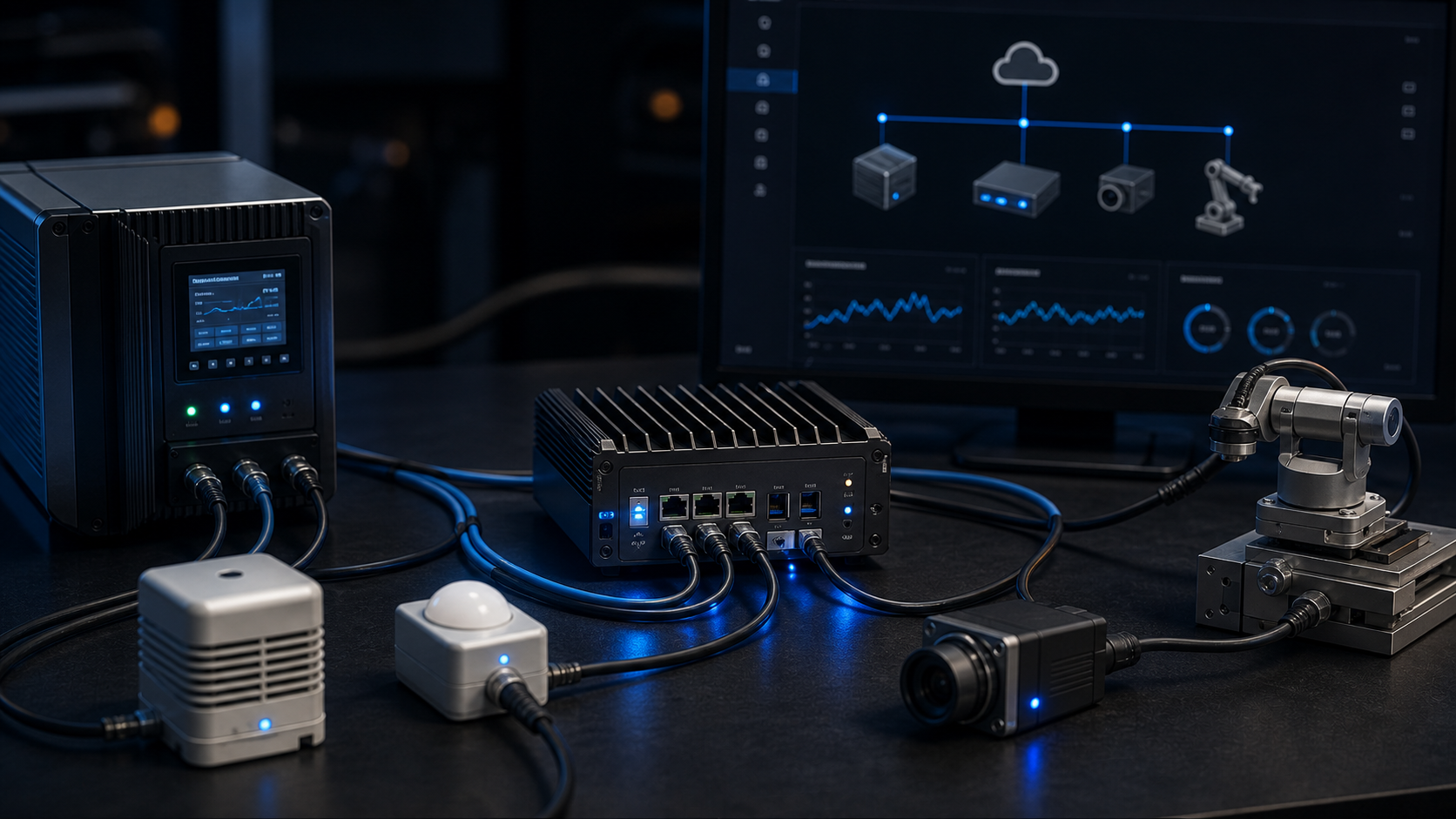
Connected-device platforms have to operate across boundaries that traditional applications can often ignore. Cloud services, local processes, physical equipment, firmware, device drivers, intermittent networks, and operator tools must all work together. The central challenge is not connecting one device; it is creating a structure that remains reliable as the number and variety of devices increase. Where software can change physical state, device states and authorization boundaries need to be explicit. Mathematical modeling helps when operating constraints interact.
The approach was to separate device-specific behavior from the rest of the platform through stable interfaces, messaging, and reusable control layers. Cloud services handled centralized coordination, telemetry, and remote access, while local software maintained direct communication with equipment. Simulation and mocking tools reduced dependence on physical hardware during development, making it possible to test more conditions earlier and with greater consistency.