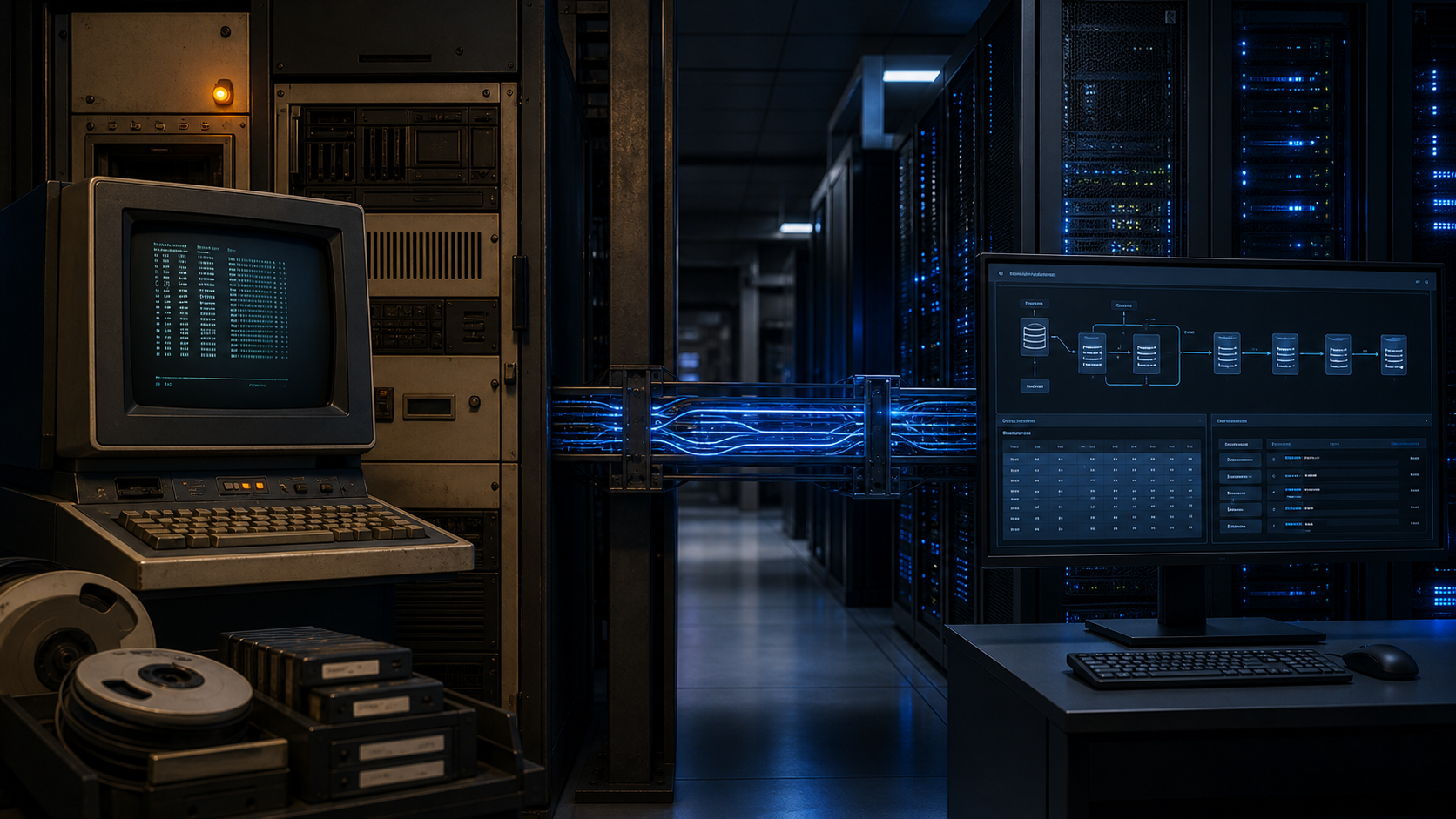
Legacy systems often remain in place because they support essential business processes, not because they are easy to maintain. Modernization therefore has to improve performance, security, and flexibility while preserving the behavior the organization still depends on. A successful transition reduces risk in stages rather than forcing a disruptive replacement.
The approach was to identify the architectural constraints creating the greatest operational cost, then replace or isolate them behind modern services, data layers, and application interfaces. Existing processes were kept running while new components were introduced. Database structures were simplified, service-based integrations replaced manual or tightly coupled processes, and measurable performance bottlenecks were addressed directly.